
A Look Back at 2022
Sevastromo Station Databank Vol. 2


The Best of 2022
9. Inside

Inside is great… for what it is, some sort of interactive short film. The complete lack of interesting decision-making makes the #8 position quite the feat. Here's my summary from my review:
Inside exists in a realm somewhere between games and film. When Inside presents the player with obstacles, it slows down and the feel is very gamey. Whether that’s because there’s trial and error involved, and you’re repeatedly dying or because there’s a puzzle that you must resolve before proceeding. None of this is bad, just average. I think Inside’s strength is when it flows like a scene in a film that’s shot in a single take. The Sam Mendes film 1917 came to mind. Not because of the setting but because of this flow. The camera goes on a journey with the main character as he traverses battlefields, countrysides, cities, and more. There’s a momentum and energy that this technique evokes that can be found throughout Inside. With video games that energy can be even more tactile as you can really engage with the aforementioned little things. Brushing aside cornstalks, sliding down roofs, careening through office complexes, shattering windows and upturning all furniture in your path… it’s never felt more engaging.
 Sevastromo

8. Hitman: Blood Money

I came into Blood Money having already thoroughly played and enjoyed Hitman (2016). What I loved about that game was the level design, it’s truly top-notch. I have never really experienced anything like Paris, Sapienza, or Hokkaido. Hitman (2016) has this perfect balance of video-gamey elements mixed with realistic sensibilities. The levels are what hold down that realistic aspect by being some of the most fully realized, visually dense places I’ve been in a video game. The Paris mansion is a mansion. That sounds silly to say but it’s true. No shortcuts were taken, basement to attic, red carpet to river dock, the map is alive with people, doing what people do, in places people do those things. Then you plop Agent 47 into the sandbox. The highest praise I can deliver to the level design is that in hundreds of hours with the modern trilogy there might be only a handful of times I thought about the level’s outer boundaries. Like I pretty much never got that “Turn around you are leaving the mission” message or wondered why I couldn’t walk over some invisible barrier. Don’t get me wrong, I’m not saying these things don’t exist in the trilogy, I’m just pointing out that the level design keeps the player immersed in the meat of the level. Add on top of this the slick movement and intuitive level interactivity, the bottom line is Hitman (2016) has phenomenal gameplay that involves a balance of forethought and moment-to-moment decision-making.
All these points are relevant to Blood Money because it is the prototype. Playing these games in reverse order meant that I can see the foundation Blood Money set for the modern Hitman trilogy. It’s nearly all there: the lived-in levels, sandbox mission structure, multiple ways to assassinate whether that’s semi-scripted sequences or a freeform opportunity, the disguise system, the variety of tools through loadouts and in-mission pickups. So, the only reservation I have outside of the obvious technical limitations of the time that most likely put a cap on level scope and fidelity, is the way Agent 47 controls. Where the modern trilogy feels slick, Blood Money is the definition of jank. Movement and traversal feel stiff while interacting with the environment and using your tools has very loose feedback. This leads to very goofy looking gameplay and a lot of restarting, especially as a beginner. It gets better as you pick up on the game’s quirks but regardless, it took me way too long to figure out how to properly garrote someone or even knock them unconscious.
7. Dusk

Dusk is a really fun game. It’s a retro FPS game in the vein of Doom and Quake. The presentation and controls are all very familiar and the user experience is very streamlined. What stands out to me is the world/art design, level design, and pacing. First off, I love the visual style of Dusk. The developer has come out and said it’s a mashup of rural Pennsylvania, S.T.A.L.K.E.R., and Quake and yeah, they definitely hit the mark. Being a Pennsylvania native, the setting of that first episode really struck home with me. Playing an FPS game with levels built around corn fields, sawmills, barns, silos, etc. was weirdly nostalgic for me, it harkened back to my middle school years of playing airsoft at my friend’s farm. The S.T.A.L.K.E.R. and Quake aesthetics set in later and are just as good. I would also add in some Thief 1 - Constantine’s Mansion vibes thanks to some levels with really trippy architecture. All in all, Dusk’s influences are legendary and I’d say the execution is right there with them, I won’t be forgetting some of these levels anytime soon.
To go along with the fantastic visual style, the level design hits all the right notes. Dusk features some great arenas that often put an emphasis on verticality and platforming. Several arenas stick out in my memory, one being what I think was a granary. It features tall silos to scale and intricate processing equipment to weave through, multiple hidden keys allow access to new areas of the granary in typical retro FPS style and this all feeds into the incredible pacing of Dusk. The movement is so slick, snappy, and speedy and the level design feeds that mechanical proclivity to just zoom around. As you explore the level, defeating enemies and getting the lay of the land, your eyes start to dart around looking for alternate routes, tricky platforms, and hidden doors and with discovery always comes new challenges whether that’s light platforming or more enemies. Combat is very punchy, your arsenal hits hard, but the opposition doesn’t feel wimpy. Most enemies take a couple shots to go down, but with the stagger mechanic every shot feels impactful, and few enemies feel spongy.
Dusk is quick, fun, and an ode to FPS games of old.
6. Metro Exodus: Enhanced Edition

My thoughts on Metro Exodus as a whole have not shifted much upon playing the ray-traced enhanced version or the two expansions. I think Metro Exodus: Enhanced Edition may be the best-looking game I’ve ever played. Exodus’ visual style really takes advantage of the ray-tracing technology. Environments like the snow-covered banks of the Volga River showcase the graphical engine's full capabilities. The snow, water, ice, and full day-night cycle enable a wide range of visual delights. The graphical fidelity also extends to character models and all the gear you’ll need along your journey. Every gun has intricate detail to it. Modifications made are shown in real time and give a tactile feel to your arsenal. Time out in the field wears on your equipment, not just with a durability meter, but with dirt actually accumulating over time. I appreciate the integration of menus into game world objects. I love looking at a map when it’s sketched on the back of a clipboard to which you can add marks to over time with exploration. This reminds of the 3D-rendered PDA in S.T.A.L.K.E.R. Anomaly, all-in-all, a great touch. When opening your inventory, you swing your backpack around and unzip it, then accessing a more conventional menu. It’s a small, immersive touch, but it adds weight to the decision of accessing your inventory.
Overall, I like a lot of the developments made in Metro Exodus, compared to its predecessors. The standout for me is the addition of semi-open world, sandbox zones in the style of S.T.A.L.K.E.R., especially maps from Call of Pripyat, think Zaton and Jupiter. This plus the aforementioned immersive elements leap Metro Exodus into the category of my favorite eastern European, exploration-based, immersive first-person shooters, alongside S.T.A.L.K.E.R. and Escape From Tarkov.
5. Hitman 3

Hitman (2016) is the perfect assassination sandbox. How could you possibly improve on perfection? Well, Hitman 3 is that same assassination sandbox just with more sandboxes to play in. I love that there’s a one-stop shop for all these modern Hitman maps. For Hitman 3 I actually started in Paris, Hitman (2016)’s first level, and played all the way through each level on Master difficulty. It was an awesome globetrotting experience with a fun spy-thriller plot threaded through all the missions. So first and foremost, I’m glad Hitman 3 combines all the modern Hitman levels into one package. Additionally, I’m glad most of Hitman 3’s levels are strong additions containing small twists on the Hitman formula. There’s not much in the way of gameplay changes, but that’s ok, if it ain’t broke, don’t fix it. The gameplay formula is solid, so it really comes down to level and target design, specifically the assassination opportunities both scripted and unscripted.
4. S.T.A.L.K.E.R. Anomaly

I very rarely rank mods in my annual top 10 list, but S.T.A.L.K.E.R. Anomaly is a truly exceptional case. Saying the S.T.A.L.K.E.R. modding scene is active is an all-time understatement. S.T.A.L.K.E.R. Anomaly alone has an extremely impressive and diverse modding scene on its own. Unlike original S.T.A.L.K.E.R. mods, essential Anomaly mods are focused on addon packs rather than performance and bug fixes. This goes to show the technical prowess Anomaly possesses. Anomaly is built on an upgraded 64-bit version of the original X-Ray Engine. This update alone is quite the feat, but the stability and customizability achieved is very impressive. The mod creator must’ve had these traits in mind because Anomaly while excellent in its own right, is also a sturdy bedrock for addons, mods, mod packs, etc.
I’ve already written a good bit about S.T.A.L.K.E.R. in my Call of Pripyat review and a lot of my feelings remain the same. My thoughts haven’t changed much because the base S.T.A.L.K.E.R. experience, predicated primarily on its atmosphere and exploration-based gameplay, is so solid. Anomaly maintains all the original S.T.A.L.K.E.R. qualities while combining all the series’ maps. It’s a win-win, simple as that.
Sevastromo
3. Elden Ring

Elden Ring proved, once again, it is possible to have too much of a good thing. For me, this keeps it out of the top spot. Here's an excerpt from my review:
As you can probably tell my feelings are very conflicted when it comes to Elden Ring. I think the resounding takeaway needs to be that Elden Ring is a monumental accomplishment which I recommend everyone plays. However, I have a few hang-ups that keep it from being one of my favorite games or even surpassing Dark Souls. The inventory clutter and repetitively useless rewards for exploration were a thorn in the side of what is one of the best worlds to discover in gaming. The usual From Software approach to story and quests I think lost its mystique and became more of a hindrance with the larger overall scope. However, the standalone quality of cutscenes and character dialogue did not suffer, it was just lost in the shuffle. The variety of build options and enemies to challenge yourself against is an order of magnitude greater than anything AAA gaming has ever seen before. I recognize this as a great accomplishment that also muddies the waters when it comes to rewarding exploration. For a new player, the first playthrough of Elden Ring can be an all-time great experience. Just don’t obsess over exploring every nook and cranny, be open to respecing your build multiple times, and maybe do better following the story than I did.
Sevastromo
2. Battle Brothers
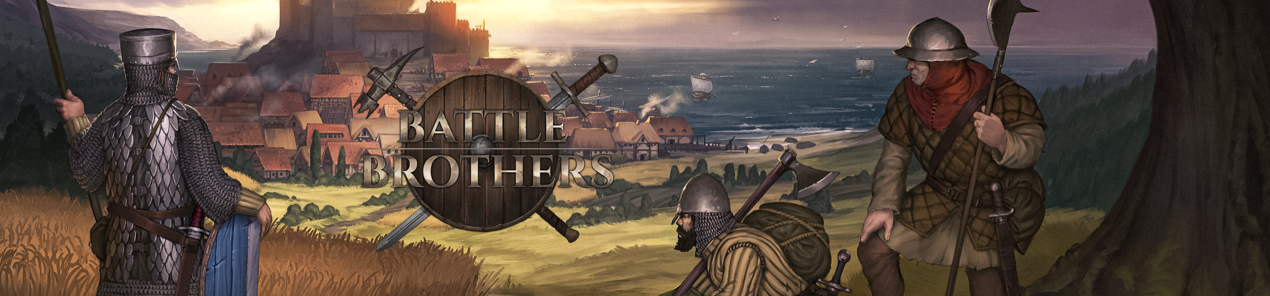
The GOAT strategy game, need I say more?
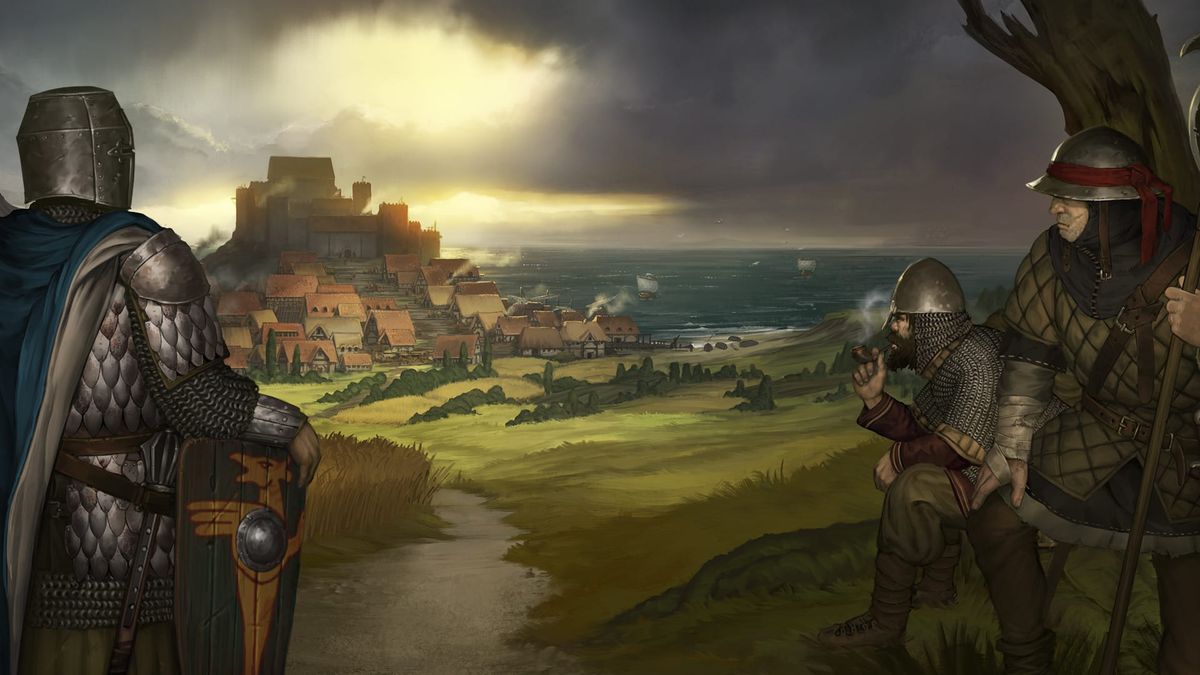
What if I told you that a game without much in the way of animations, where characters have no hands or legs, and weapons don’t move has some of the most visceral fatalities of any game? You’d be a little confused and rightfully so. This indie strategy game has accomplished so much in the way of immersion that I had an out of body experience the other day thinking about just this. I broke concentration in the middle of a tight skirmish in Battle Brothers and realized how simplistic every action looked onscreen. From an outsider’s perspective, one can hardly tell if anything is happening. An icon may flash above a character’s head, a character may glide across tiles on the screen like a chess piece but nothing visually extravagant or near realism is displayed, no one has legs for goodness sake! However, to me, the battle felt visceral with each turn feeling so precious, yet I was rushing decisions eager to deal a decisive blow to the enemy’s forces. This game gets you caught up in the heat of battle, literally. As the commander of your forces, you’ll sometimes lose sight of the big picture, the larger implications of a tactical decision will be missed, and you’ll pay for it later. On other occasions, you’ll remain cool and calculated and pull off flawless victories with your men leaving the battlefield with not so much a scratch on them. Overhype Studios, developers of Battle Brothers, have accomplished a great deal with this gripping, low-fantasy, turn-based RPG. They have masterfully married beautifully detailed art design with tense, strategic combat with both resting on game progression that pulls you into a huge, procedurally generated continent and connects you with a band of misfits who you grow to call brothers.
 Sevastromo
1. Doom Eternal

While I may have put way more time into the likes of S.T.A.L.K.E.R., Elden Ring, Battle Brothers, and Hitman 3, Eternal was the first time I’ve experienced anything like it. I’ll remember Eternal like I remember my first time playing a Souls game or a roguelike, it’s not just the great gameplay, it’s also the sensation of being in uncharted waters. Here the summary from my review:
Doom Eternal is the best action FPS I’ve ever played, hands down. No other game has ever had me glued to the screen so intensely. Other games have drawn me in just as much but the pace at which Eternal operates leaves your eyelids completely peeled back and your eyeballs popping out, scraping across the screen trying to take in all the information presented. Seriously, it’s hard to describe the sensory experience that occurs during an Eternal arena fight, there’s nothing quite like it. And it really comes down to the layered strategic options: resource management, enemy weaknesses, navigating the arenas, weapon combos. So, while you’re trying to take in all the visual cues on screen, audio cues are also going off in the background, add on top of that your brain frantically trying to make the right decision or more likely scrambling to correct the mistake you just made. And while I’ve spent so much time gushing over the gameplay, I’ll quickly mention that everything else about Eternal is just top-notch. The art and world design are just gorgeous and imaginative, the soundtrack and sound design are mixed just right to convey information while revving up the intensity, and the performance is phenomenal. Id Software absolutely optimized the hell out of Eternal and what game could possibly benefit from that more?
Sevastromo
Honorable/Dishonorable Mentions
In the Conversation
Quake I
I love when old games get quality-of-life updates making them readily playable on new PCs. It’s a bonus when the visuals are upgraded too, especially when the original visual style remains preserved. Quake Enhanced is a perfect example of just this. I remember trying out Quake quite some time ago and bouncing off it and for what reason, I’m not sure, it might have been the low resolution or controls. Now, I could have looked around and found mods to fix these issues as I’m sure they exist, but at the time I just wasn’t motivated. That’s why I like these updates, they remove barriers to entry and give me more reasons to try out classic games.
So, with all that being said, after playing through Quake in its entirety, I like it! It’s clearly a pioneer of the FPS genre. Quake feels like you’re playing through a proof of concept for the entire FPS genre. Everything about the game feels like the core of what’s to come in one of gaming’s major genres. Where Doom and Wolfenstein felt like a first stab into the unknown, Quake feels like Id Software firmly planting their flag in new ground. I attribute this primarily to the movement and level design. The addition of jumping and full mouse look really fleshes out the groundwork Doom laid in regards to movement. And in parallel the level design was allowed to flourish thanks to these advancements. There’s more variety now with weaving levels of verticality, deep pools to swim through, and ramparts to leap across. It feels very liberating when playing in quick succession after Doom.
Quake is a fun, quick, singleplayer FPS experience that is baked in historical significance. The recent enhanced update only makes it easier for newcomers to enjoy it.
Vampire Survivors
So, I played Diablo 2 earlier this year and found it very bland in terms of gameplay, the world, characters, music are what drew me in and kept me around for a little bit. The gameplay is so boring that I assume I must be missing something because Diablo 2 is considered a classic pretty much universally. I found it mechanically repetitive, you just smash the attack button and walk around, and on top of that there’s pretty much zero interesting decisions to make during the gameplay loop. Bottom line is I want to like Diablo 2 but I don’t get it.
Ok, but what does this have to do with Vampire Survivors? Well in Survivors you do even less mechanically speaking. Everything except movement is stripped away and yet I recommend it? Let me be clear, I’m still unsure if I actually, fully enjoy Survivors, but I can’t deny I’ve played a good number of runs. I think what separates Survivors from Diablo 2 is the bite-sized nature of its content. Runs are 30 min or less which means the one interesting decision-making opportunity present in the game, level-ups, come at a rapid pace.
I’m very on the fence about Vampire Survivors and doubt I’ll want to play it again or any games of its kind. With that being said, I really like all the quality-of-life features, informational menus, selection screens, pretty much the whole user experience. It’s very streamlined and fits well with a laid-back game of this nature.
Mediocrity
Dead Space 2
If you’re looking for a sci-fi action horror amusement park ride, this is the game for you. I liked it, but the linearity and lack of more conventional survival horror gameplay mechanics had me losing interest. I put Dead Space 2 in the Resident Evil 4/5 category.
Metro 2033 Redux
Going back to this after playing Exodus was a bit rough. The linear level design just isn’t for me.
Inscryption
Not sure what all the hype was about. I thought the first card game was interesting and then the gameplay kept switching and I kept losing interest.
Dying Light
Yikes… everything outside of the parkour is questionable in quality. I feel like it's not far away from being a decent game though.