
Dishonored 2
High Chaos Demon vs Low Chaos Angel

Game Information
Game Name: Dishonored 2
Platform(s): PC, Xbox One, PlayStation 4
Developer(s): Arkane Studios
Publisher(s): Bethesda Softworks
Genres: Stealth, Action
First Release Date: November 11, 2016
Last Update Date: November 7, 2017
Description: Reprise your role as a supernatural assassin in Dishonored 2. Play your way in a world where mysticism and industry collide. Will you choose to play as Empress Emily Kaldwin or the royal protector, Corvo Attano? Will you make your way through the game unseen, make full use of its brutal combat system, or use a blend of both? How will you combine your character's unique set of powers, weapons and gadgets to eliminate your enemies? The story responds to your choices, leading to intriguing outcomes, as you play through each of the game's hand-crafted missions.
Reviewed On
Hardware: S.T.A.L.K.E.R.
(Radeon RX 6950 XT, AMD Ryzen 7 5800X3D, 32 GB RAM)
Platform: Steam
Review Notes
- Mods: remove crouch vignette
- Played on hard difficulty as Emily.
Introduction
I played the first Dishonored many years ago. After getting into the Thief games, it felt like a modern successor I could jump to. I recall enjoying it, but it didn't stick around in my head much and over the years I've never had even the slightest inkling to return or to try out its sequel Dishonored 2. Well, after my well-documented return to Prey, I still had the itch for more Arkane. And what better game to play next than Dishonored 2, the game that was developed alongside Prey by Arkane Austin's sister studio in Lyon, France. Going in, I had a couple questions in my mind that revolved around my experience with the first Dishonored. Is the sequel better than the original despite what most of the community says? Has my taste in games shifted to where I'd appreciate Dishonored 2 more now that a decade has passed since I played the first? What was it even that I disliked about the original in the first place?
Now that I've played it through, I think I've got the answers to my initial questions. I also want to take the time to write some thoughts out because more questions popped up in this playthrough that were probably dancing around in my head ten years ago.
Play Your Way
There's something wrong with these Dishonored games that bothers me endlessly while playing. It's a game design pillar that on its face seems enticing and agreeable, but in practice clashes hard with my enjoyment of the game. It's this notion of "play your way" which is in reference to the dichotomy of action and stealth or high chaos and low chaos. Players are free to tackle problems their way: do you go in guns-a-blazing or ghost the level not having a soul lay eyes on you?
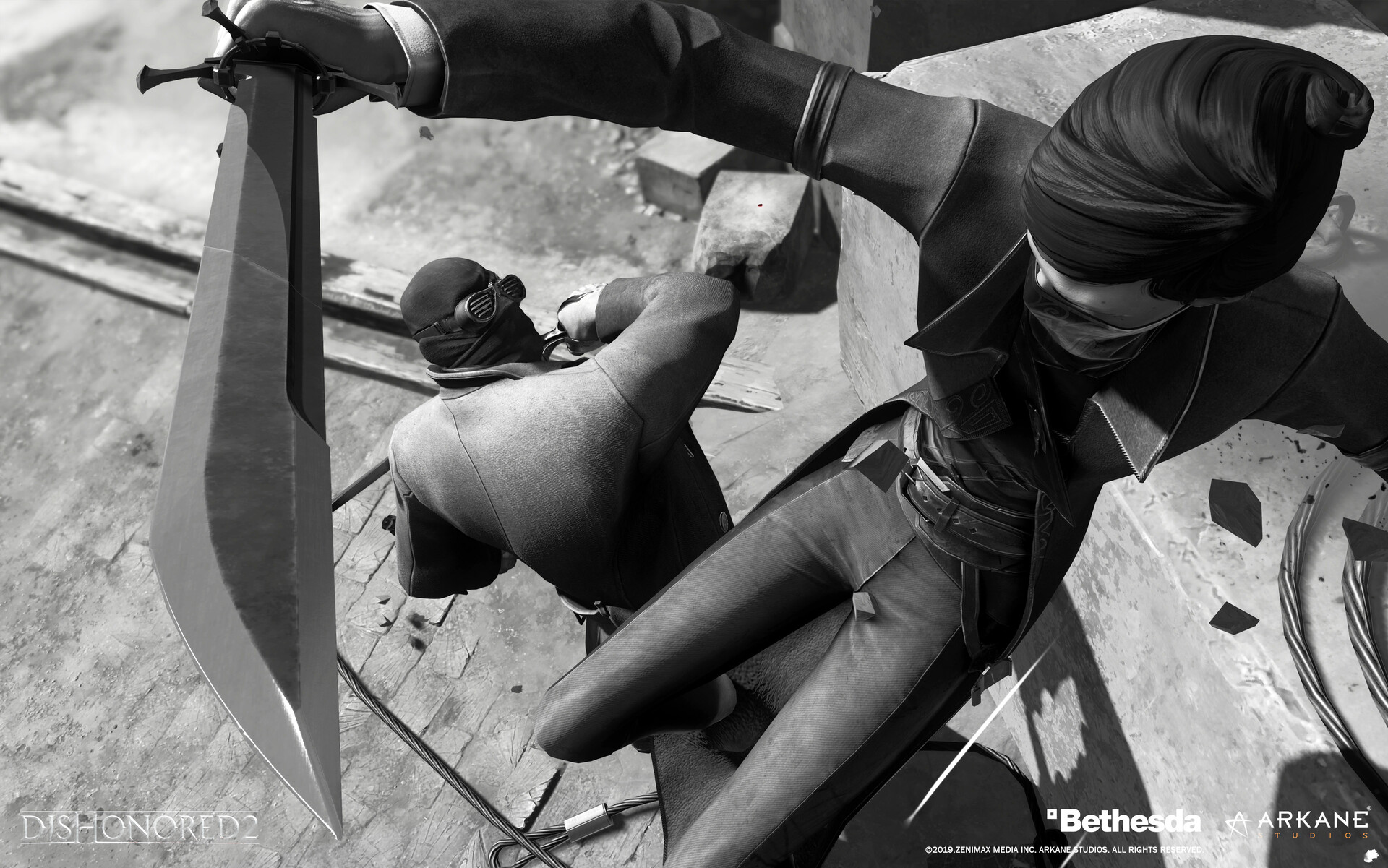
So here's the predicament I find myself, and this is speaking from how I interpret and interface with a game like this, the high chaos, action version of Dishonored 2 is incredibly fun mechanically but morally wrong while the stealthy, low chaos version gets you a better ending but turns the game into trial and error. Disclaimer: I really do not like using quick save/load, it destroys immersion and any gameplay rhythm you've established. So, on a first playthrough, and I don't care how good you are, you are going to be seen by the enemy and they are going to aggressively hunt your ass. It is at this point that the high chaos demon appears on my one shoulder and the low chaos angel appears on the other. The high chaos demon tells me to rip and tear, jump off the ledge, smack their skull into the pavement, whip out the pistol, shoot the next guard's knee out, jump and stab my sword into their chest, use 'Far Reach' to pull the officer off the balcony and slice him midair… You get the point: use your substantial arsenal of weapons and powers to lay waste to those who stand between you and your objective. Meanwhile the low chaos angel on the other shoulder tells me to run and hide, maybe if there's only one or two guards, slip out of sight then pounce when they've turned around and incapacitate them.
So why not just go for the action-heavy, mechanically fun route and kill anyone that lays eyes on you? Well, you play as an empress who's been overthrown and now wanted. In the first level, which is essentially the coup and immediate fallout, I had no problem hunting down and slaughtering my betrayers, it felt justified. But then you travel to another city and begin sneaking through alleyways and apartments and you overhear conversations and little interactions that bring humanity to the common folk. I appreciate these off the cuff moments you can observe and overhear and as the empress of these people you feel a responsibility to them and she'll even comment on this sometimes. Moral of the story is my zeal for revenge wore off completely and fairly quickly making the high chaos path seem completely psychotic. What decent empress would ever go full-Doom Slayer mode and glory kill the guard who's just doing his job standing at a checkpoint, remarking about how he misses his kids and hopes to see them soon? Maybe some people find this compelling, I find it confusing. I feel like there had to be an alternate way to frame the main character, story, or high chaos route to make it be less psychotic of a path.
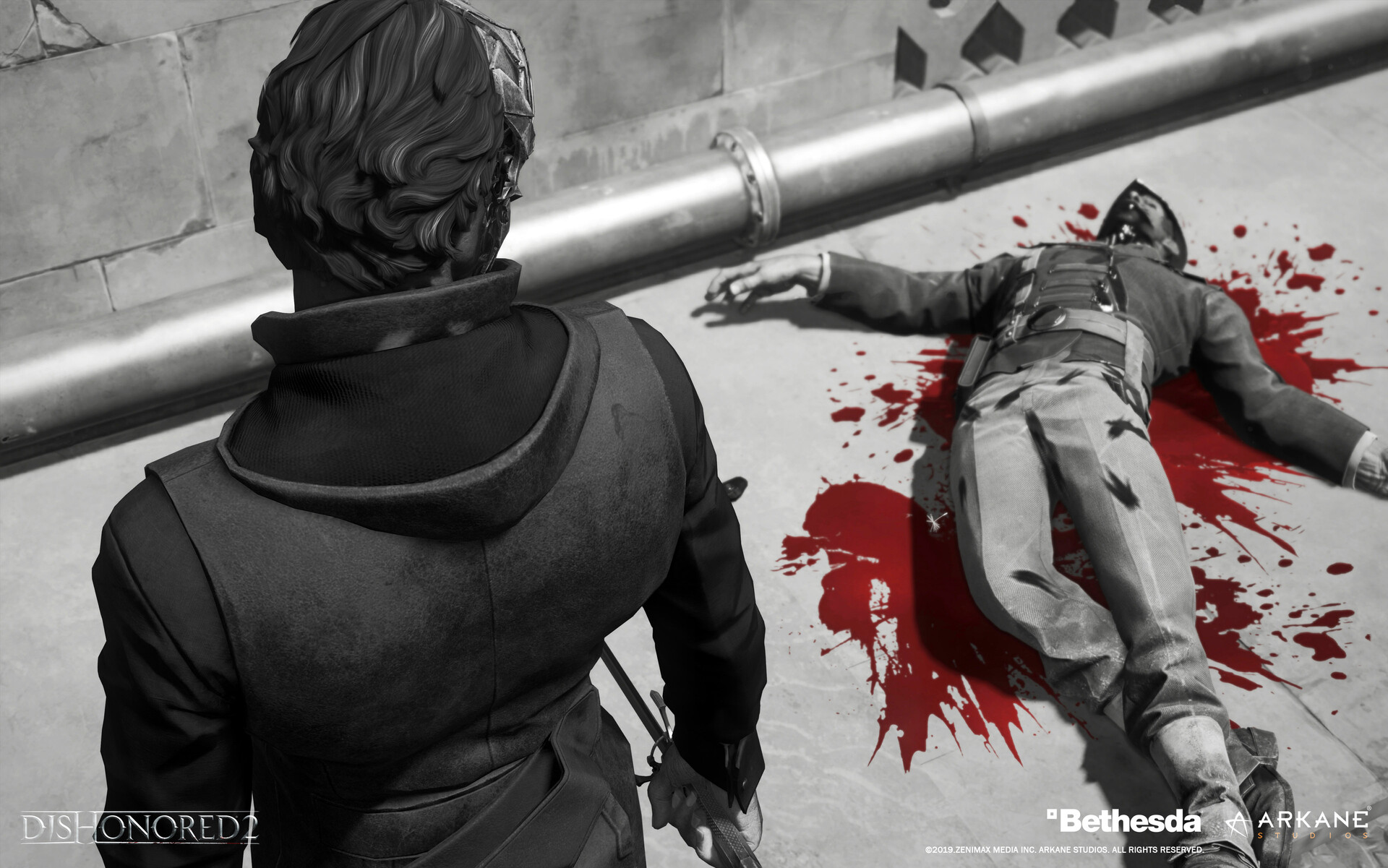
I ended up falling somewhere in between the two extremes. I wasn't good enough or knowledgeable enough yet to ghost the levels and the murderous route didn't feel right. So, I ended up choking out a lot of guards, getting caught and running away, and using traps and contraptions to confuse and get around certain bottlenecks. But every now and then I had to feed that base urge to slaughter my enemy. Probably about once a level, upon being caught, instead of running away or trying to silently deal with the guard I would simply stand up, draw out my sword and pistol and stand and fight. A bloodbath would ensue, severed limbs, decapitations, shattered bone, ripping souls from flesh… And then I'd pause and reload from the last auto-save, that wasn't the real empress, that was the high chaos demon on her shoulder taking too much control.
So, how would I attempt to fix this problem? I would go after high/low chaos being too binary while also being too vague. Here are two actions: bombing guards and civilians in the street with a whale oil tank versus silently assassinating witches and nest keepers in a secluded mansion. The issue here is that from a chaos perspective, I have no idea which is higher chaos, but from a morality standpoint the answer is abundantly clear. Here's another one: is stopping the pair of civilians about to bomb the foundation of a high-rise to get into a black market the same as murdering a homeless guy in the street? I don't know! To summarize my point here, this "morality" system exists and has consequences, that's cool, so make it make sense for who you're playing as: an empress on the run. I think detections and who you're killing should matter in the chaos system. Shouldn't getting the evil, destructive witches out of here help the common folk? Isn't that what the chaos system is about? Better outcomes for the commoners?
So, now that I've ranted about angels and demons, high chaos and low chaos, why is this system existing such a problem and does it really impact the rest of the game that much? The answer is yes and here's a totally contrived three-way tug of war that I'm making up to explain my stance. At the three corners of this made-up tug of war are the gameplay rhythm, level exploration, and character roleplay. Not compromising on any of these three aspects would lead to what I believe would be my ideal way to play Dishonored 2 and games like. Let's dig into what I mean with each of these aspects. By gameplay rhythm, I'm mainly referring to playing without quick save and load. Letting the game play out and experiencing uninterrupted, immersive gameplay is the goal. A death every now and then is no big deal, but reloading the same save over and over again to sneak past a guard at just the right time is not my idea of fun. The rhythm also refers to the gameplay itself. I don't want to choke out every single guard, civilian, or whatever on the map. I also don't want to run and hide every time anyone sees me. I don't want to get bogged down and I want to keep moving through the level. Level exploration refers to my drive to fully experience arguably the best part of Dishonored 2 and that is the level design. One could limit a lot of risk and exposure in a level by beelining it to the objectives. But what I want is to find all the nooks and crannies, overhear interesting interactions, find hidden paths, and more. I'm not trying to see everything in one go, but I'm also interested in pursuing multiple options and paths. Lastly, there's character roleplay and I've already written about this at length in regards to the chaos system and our protagonist's morality. I chose to play as an empress on the run, the game set up this scenario, and therefore I should be able to play out the game as an empress on the run, unless told otherwise.
So what makes this a tug of war is that if I take two pillars, let's say gameplay rhythm and level exploration, and pull on those by not save-scumming and doing a good bit of exploration, the third pillar roleplay, will start to crumble. No save-scumming and lots of exploration means you are more than likely going to be seen by a lot of hostiles and with that comes the temptation to satiate that high chaos demon. This is essentially the vein in which I approached my playthrough and the basis for what I wrote about above. Let's say you pull on rhythm and roleplay, in this case, unless you’re incredibly good at the game right out of the gate, you'd have to go about this by sacrificing exploration and prioritizing the main objectives above all else. Without exploration, you miss out on a lot of progression items that unlock abilities that in turn limits your gameplay. Plus, you miss out on seeing and experiencing a lot of Dishonored's world. Not a fun way to engage with the game on a first playthrough. If you pull on exploration and roleplay, rhythm will suffer whether that's due to excessive amounts of running and hiding or quick save/loads. I guess this is just a long-winded way of saying I was torn on how to play this game and nothing helped me settle into total immersion while playing Dishonored 2.
"That level design... oh that level design"
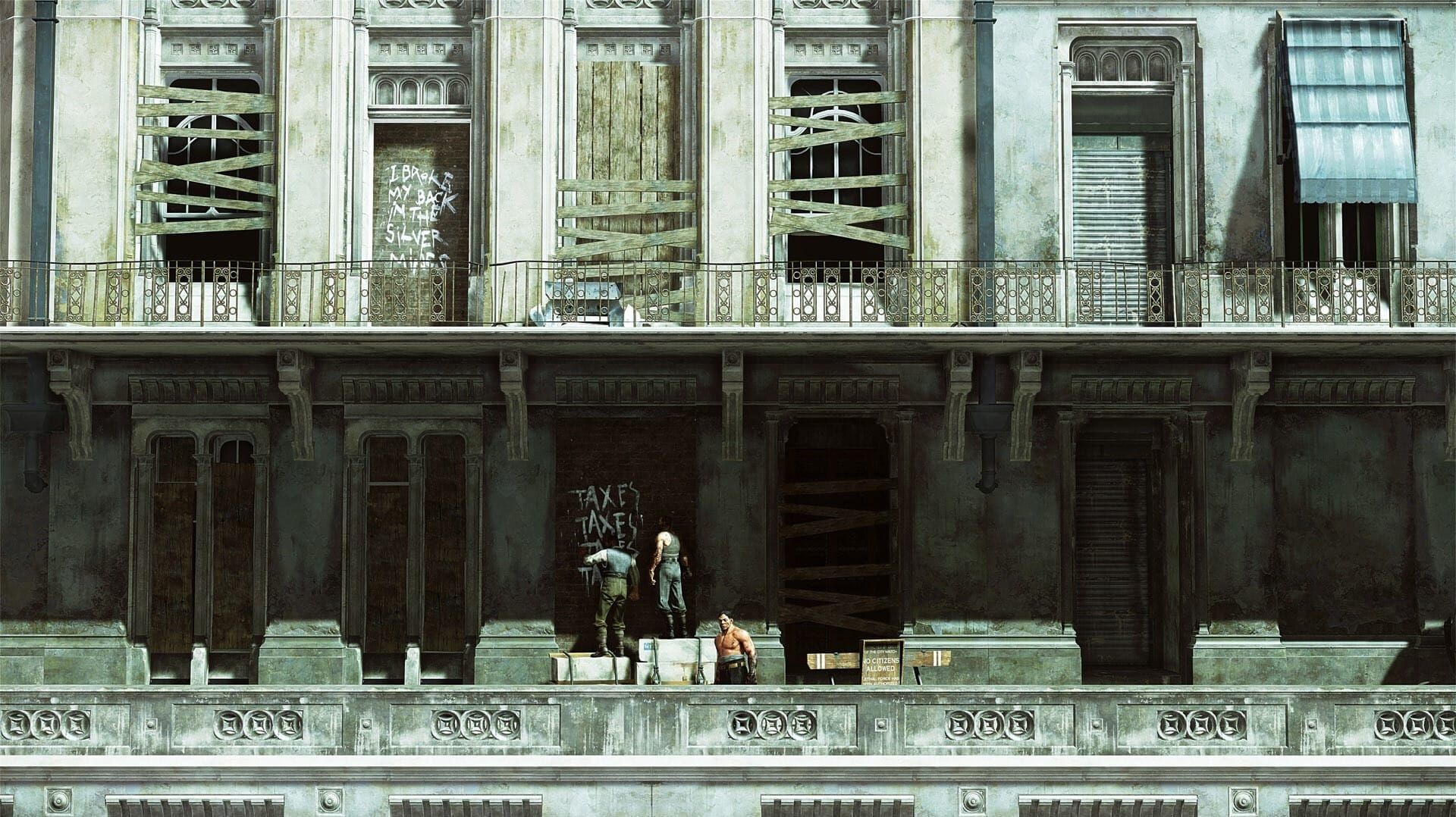
Other than this tiny quibble over the "play your way" game design, I found Dishonored 2 to be a rather exceptional game. Where to start? Well, the level design is the star of the show, and my god is it glorious. It's just a handful of levels but each are exceptional in their own right, memorable and distinct from the rest. First I'll point out, and this goes for all the levels, the world of Dishonored feels lived in and immersive. Civilians roam the streets going about their business, out on the docks bitching to one another, having hushed conversations in an alleyway. You can happen upon little scenes that unfold seemingly naturally but are surely planned out so that an attentive player overhears them. In the Overseer's headquarters you can observe one overseer mercifully ending their friend's life as they were succumbing to previous injuries. In the first level you can find a guard trying to pressure the editor of the local newspaper into publishing a particular headline. In the area leading up to Jindosh's mansion you can come across a couple of ladies talking about robbing some place. Later you can find them stacking explosives behind the black market shop. And this leads into the part of the "play your way" Immersive Sim design philosophy that I enjoy much more: problem-solving the level. I mean this on both a macro and micro scale. I like the classic Prey test: can you get past this locked door? I also like the classic Dishonored test: how will you get around this guard checkpoint in the town square? The high chaos, low chaos question is still there, but there's also a lot of level design pieces and little gameplay mechanics that work their way into that as well. Do you find the power source to the wall of light and rip it out? Do you find and work your way through a quarantined apartment complex that's infested with bloodflies? Do you find a secret rat passage in the alleyway that you can move through in your phantom form? Do you steal a guard's key ring so that you can unlock and sneak into their guardhouse? Do you rewire the light wall or guard tower to set the equipment against the guards? Choices and creativity abound and I love it.
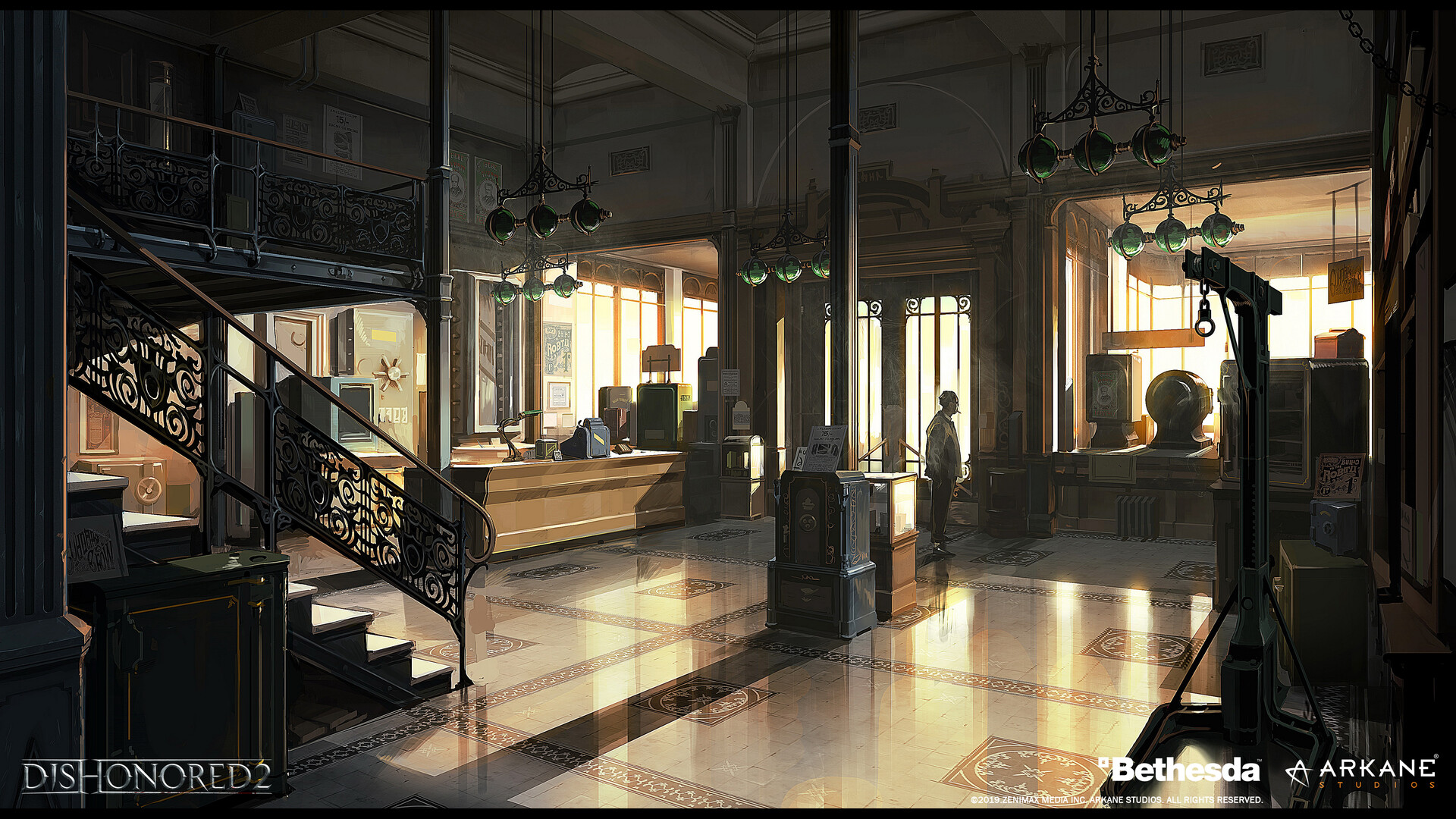
Another aspect I love about Dishonored 2's level design is the verticality. In particular, the levels where you're in the city, you can just keep going up and up. And I appreciate it because more often than not there's not much going on up there, it's just another part of the level. Often, it's just a nice view and a sense of feeling like Batman, perched, scouring over a city in shambles. Even the tighter, single building-based levels have many floors with hidden basements, tucked away attic hideouts and everything in between. I get Hitman 2016 Paris mansion vibes from many of the levels here; that's high praise.
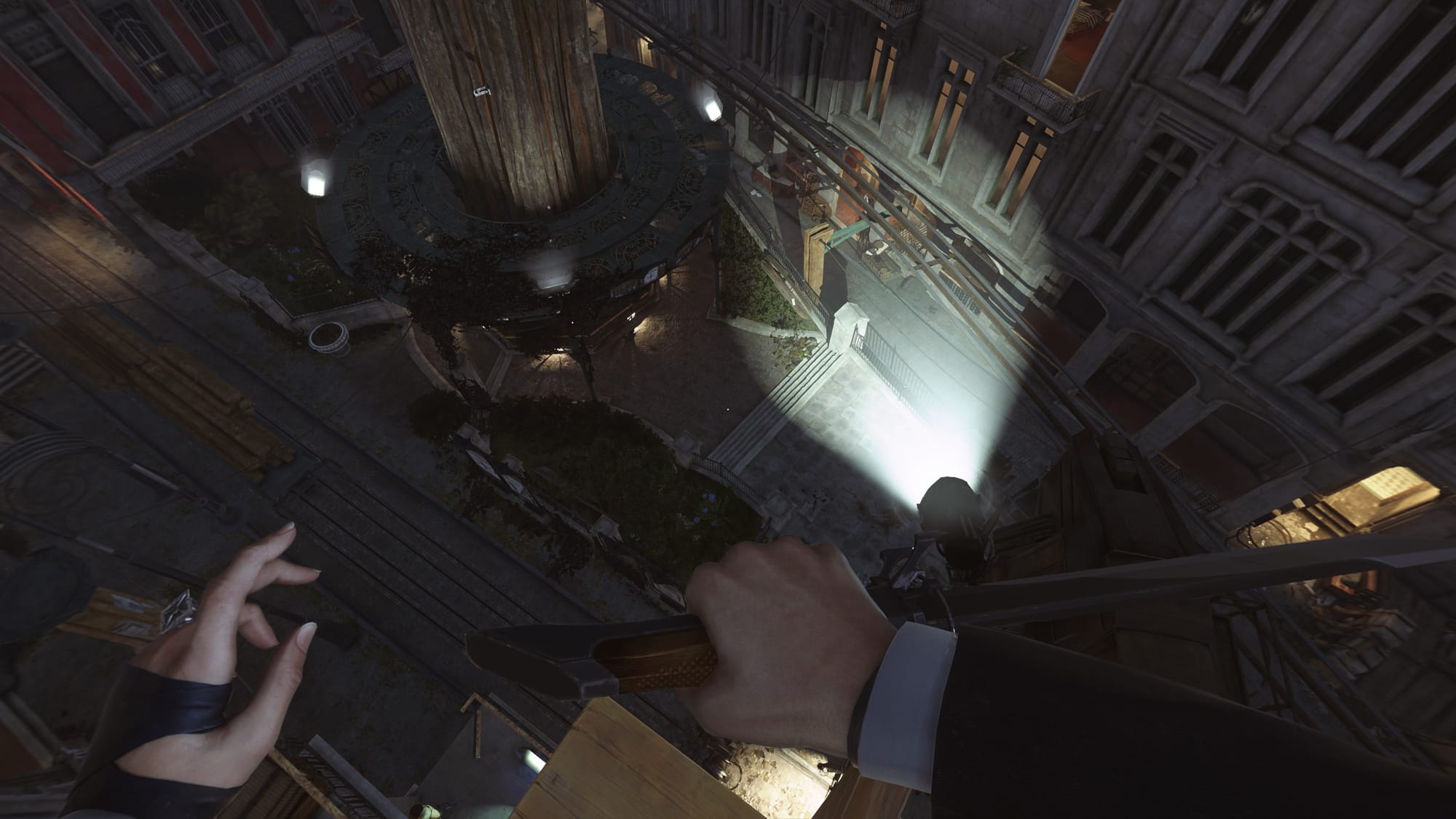
When Arkane were designing the scope of the game, the story, the gameplay, etc. it feels like a lot of love and focus was poured into these levels. There's nine in total and outside of the first, intro level in Dunwall, simply put, they're all bangers. There's barely a dip in quality anywhere. What an accomplishment.
Edge of the World
Many levels have a creative twist to keep things fresh during a playthrough. The first true levels are the Karnaca docks into the carriage ride to Addermire Institute. Karnaca docks has the classic Dunwall city streets structure and design with just a flip on the aesthetics. It's a great place to start as you get familiarized with your toolset and the world around you. Addermire Institute has that insane asylum on island vibe and has the tried and true large, multi-level building Immersive Sim puzzle box design. Many entrances, many exits, many routes, many minor points of interest.
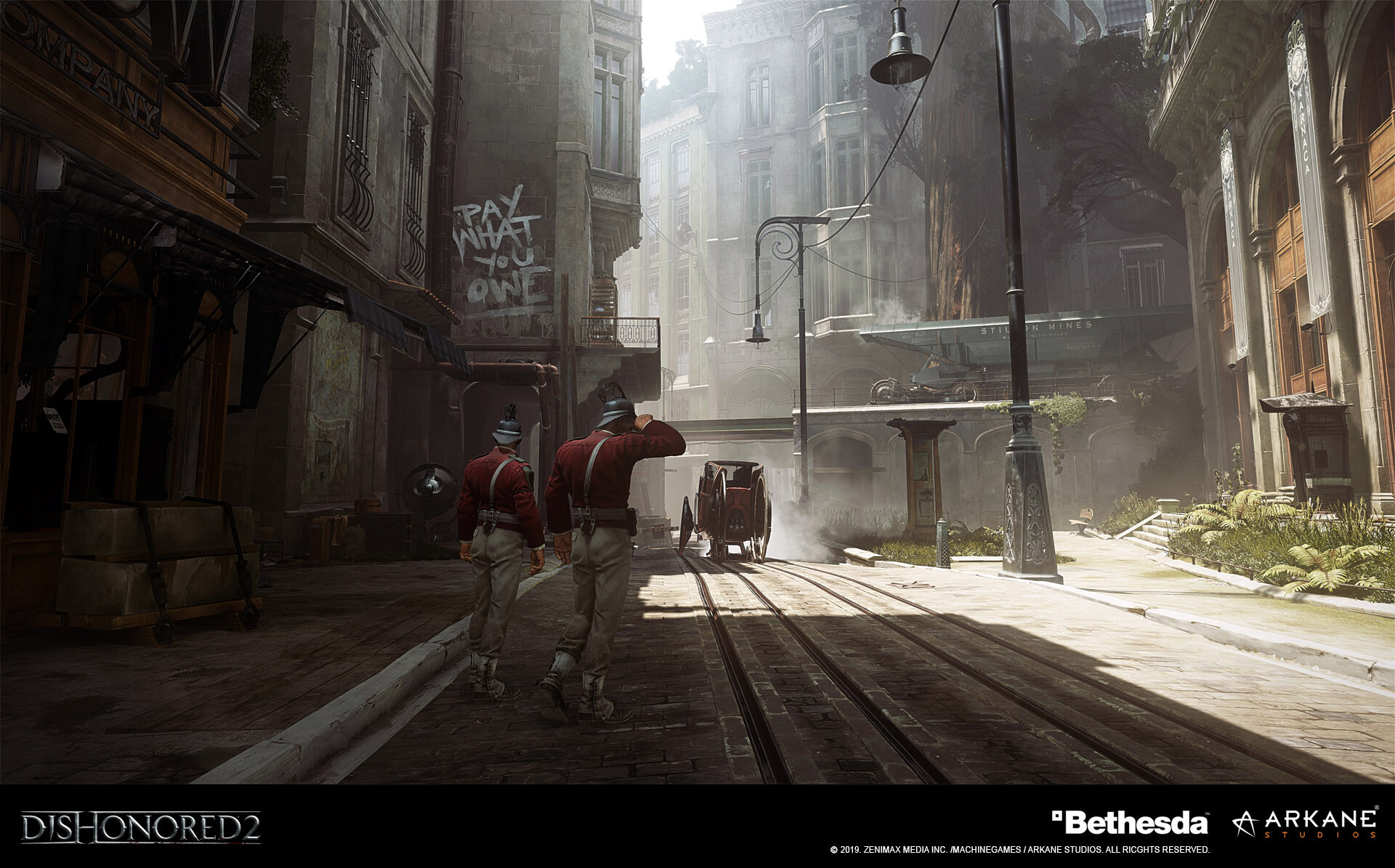
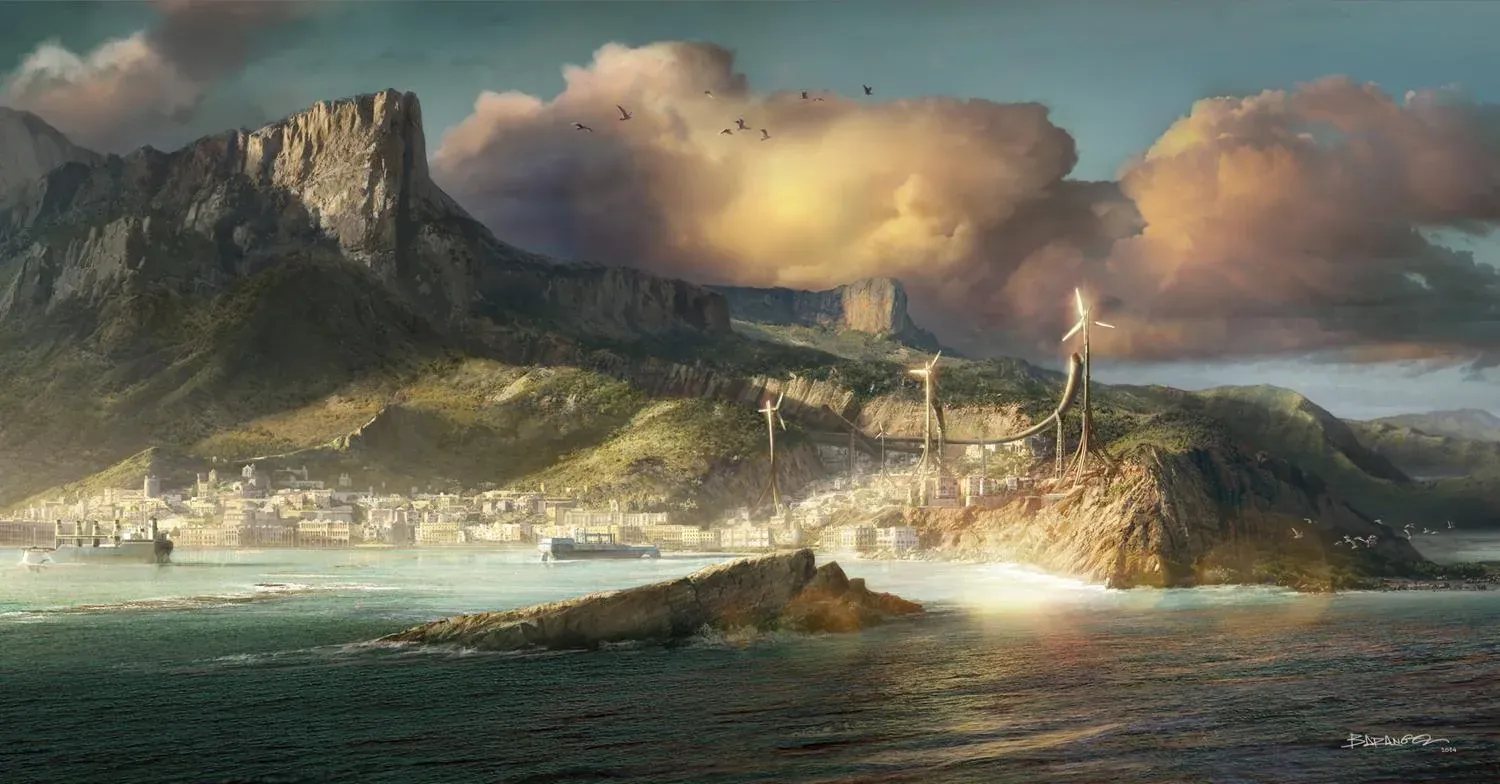
Before I go to another level, I have to show some appreciation for the attention to detail and thoughtfulness that is put into the level transitions and home base. This game could've easily teleported your character between mission locations and left it at that. Instead, they put effort into having the geography of Karnaca making sense and your character's travels being accounted for. It all starts with Karnaca being a port city with many access points and your character's home base being "The Dreadful Whale", a medium-sized ship that's anchored out in the bay. From there you take a skiff to the many points of interest across Karnaca. And it doesn't stop there. For instance, the next level you need to get to, the hilltop, clockwork mansion of Jindosh, instead of starting outside of the mansion, you start on the skiff in a sewage canal underneath the town below the mansion. To get there you have to work your way through the town, get a carriage ride to the upper district, unlock a gate, and continue up to the mansion. Each mission is like this; they all have tendril-like paths that lead back to the ocean.
The Clockwork Mansion
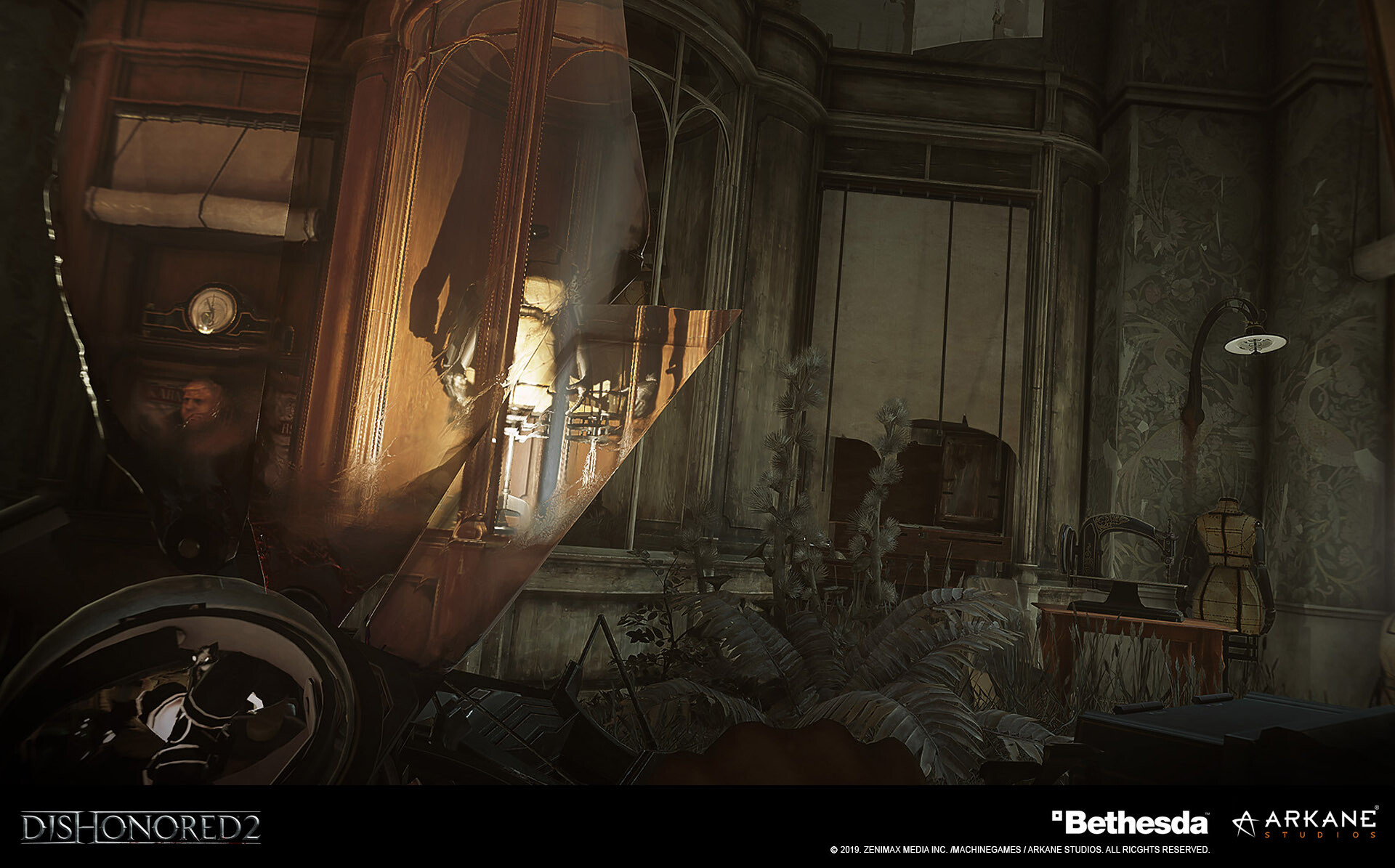
What can I say, it's a mad-inventor's mansion full of shifting walls, rotating rooms, clockwork soldiers and more. It's an absolute treat of a level that quite literally puts the "puzzle" into the puzzle box level design.
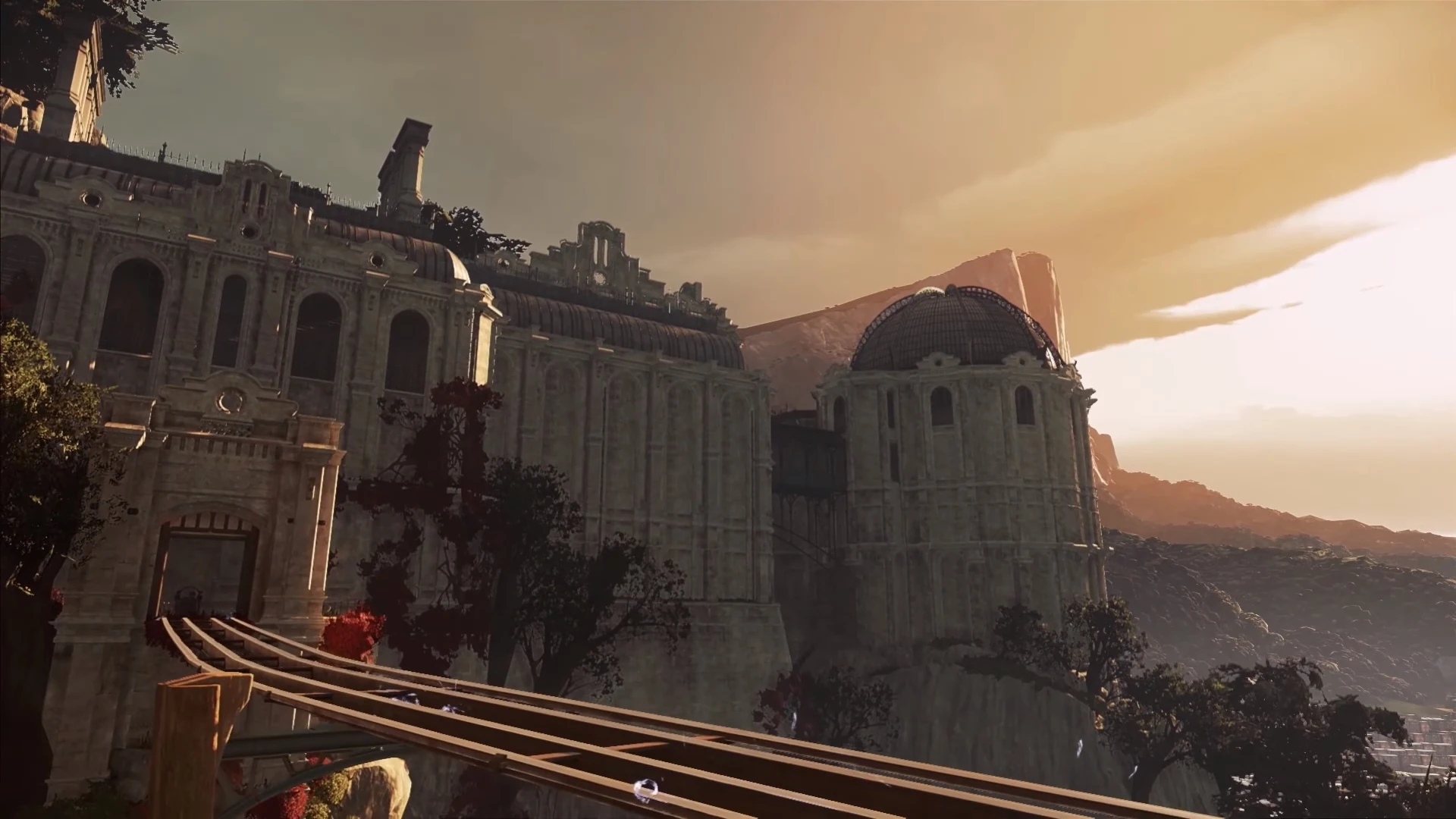
Windows don't lead to the outdoors; they lead to the backrooms. Here you can sneak through the bowels of the mansion, pull levers, and pop out in unexpected places. The main target is the inventor Jindosh himself and everything from his bedroom to his laboratory to the prison he keeps his mentor in is a puzzle box.
Dust District
The Dust District is notable thanks to its dueling factions, the Howlers and Overseers. Both have their headquarters, both leaders are present, and both want the other's blood. You get to play as an agent of chaos for one, the other, both, or neither. It's a dynamic level with its intermittently blinding dust storms, changing alliances, and hostile/neutral territories.
A Crack in the Slab
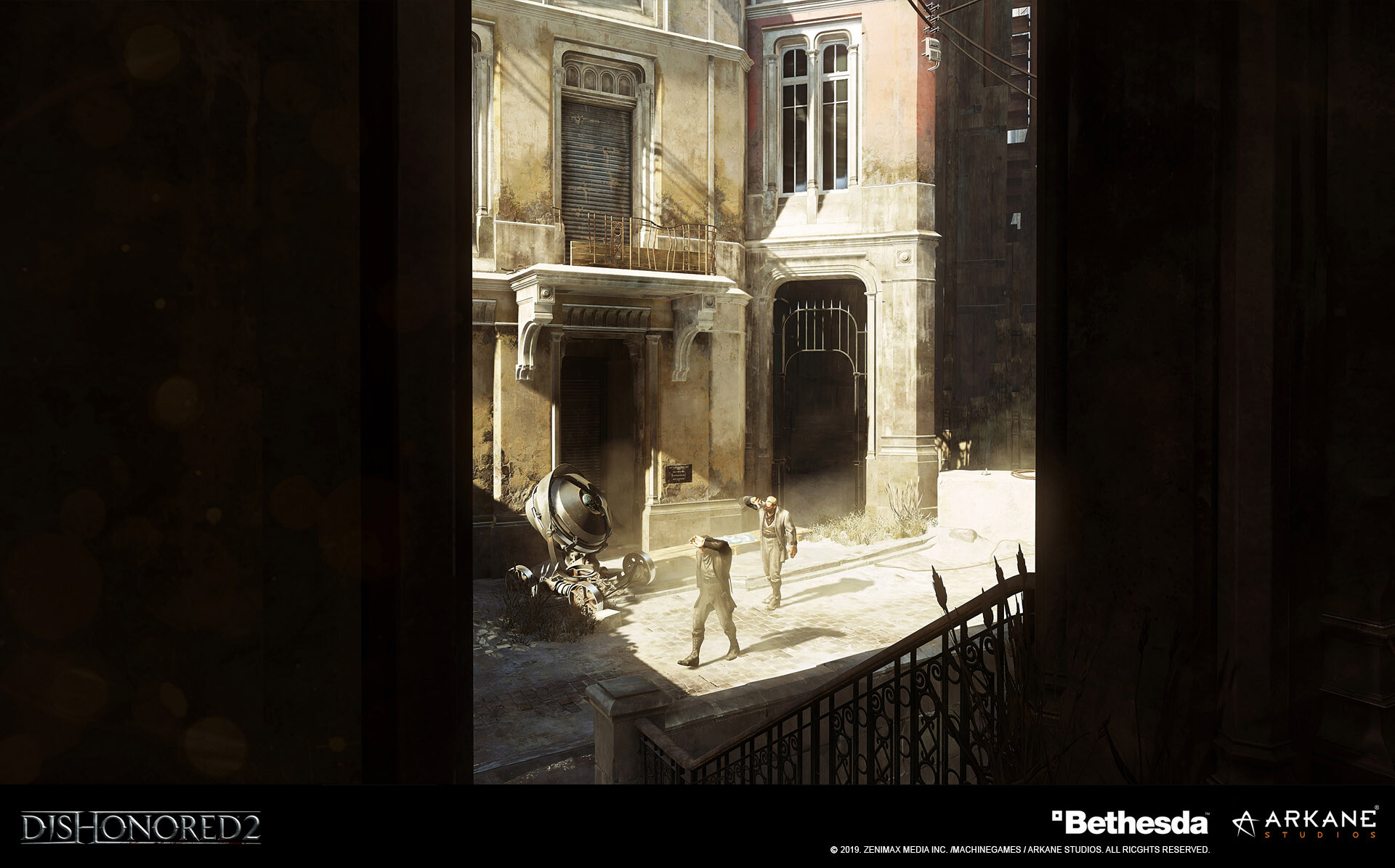
The Dust District leads into perhaps the most memorable level of all: A Crack in the Slab. Stripped of your powers but given a timepiece allowing you to teleport through time, you must navigate the dilapidated ruins of the current day Stilton mansion while investigating what happened three years ago in the same location. Puzzle solving and the combat get a brain-bending, yet refreshing switch-up via this time traveling device. Without your powers you feel naked but, slowly, the true power of the timepiece creeps up on you. Before you know it, you'll be spooking a guard, blinking out of the existence, and appearing behind them to stab them in the back. It's wicked powerful and wicked cool. And I think it was smart to only do it for one level in this restrained way. The mechanic doesn't overstay its welcome and keeps things feeling fresh.
There's also the Grand Palace and the Royal Conservatory which serve as more standard Hitman-esque levels with a primary architectural centerpiece to navigate. I thoroughly enjoyed them both. And lastly there's a final level in Dunwall Tower filled with witches and robots which I saw as a green light to go all out. Grenades were let loose, hounds were shot up point blank with my fully upgraded pistol, witches were dominoed and burned alive. At the end of the day if there was one reason, one selling point I'd pitch to get someone interested in Dishonored 2, it would be these levels and their intricate and enrapturing design.
Quick-Fire Praise
The Combat
I tried to record some action-heavy, visceral combat and utterly failed trying to chain together a sequence worthy of clipping out for a video. I looked up some high chaos gameplay on YouTube and found this:
Holy shit... You surely get the point: Dishonored 2's combat is sick. You now should understand why indulging that high chaos demon on your shoulder is so tempting.
The Art Style and Atmosphere
I've played a few Unreal Engine 5 games in recent months: S.T.A.L.K.E.R. 2, The Talos Principle 2, and I tried out Ready or Not. While these games can look beautiful more often than not, there's this reoccurring issue of blurriness, artifacting, and graininess. When things are still, a vista can look picturesque, but as soon as you start moving and paying attention to the background, stuff starts to get smeary. It's annoying. It's these nagging issues that subtly take you out the experience over and over again. Not causing you to fully rebuke the game but undermining the experience just enough to have you going into the graphics menu a little too frequently.
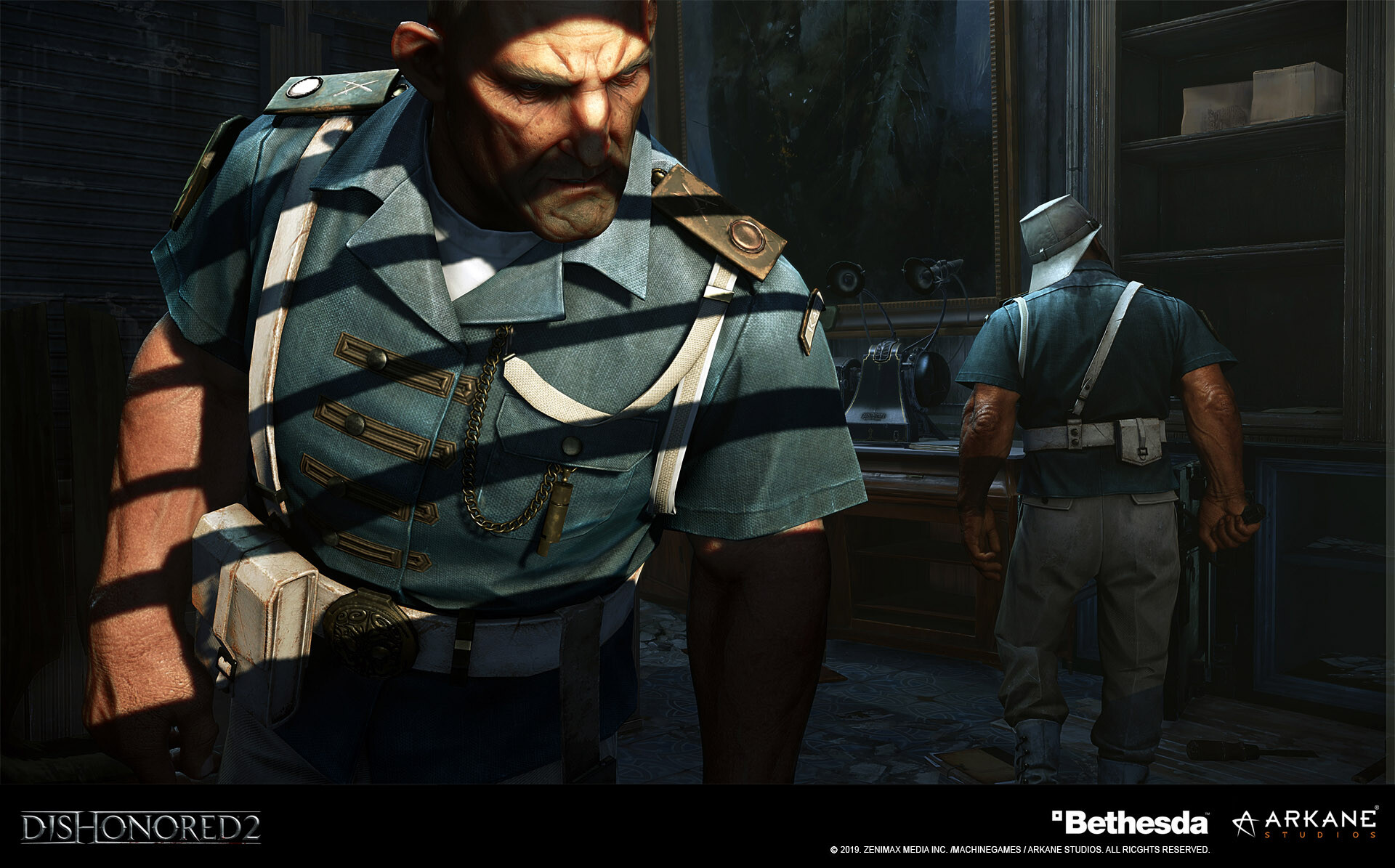
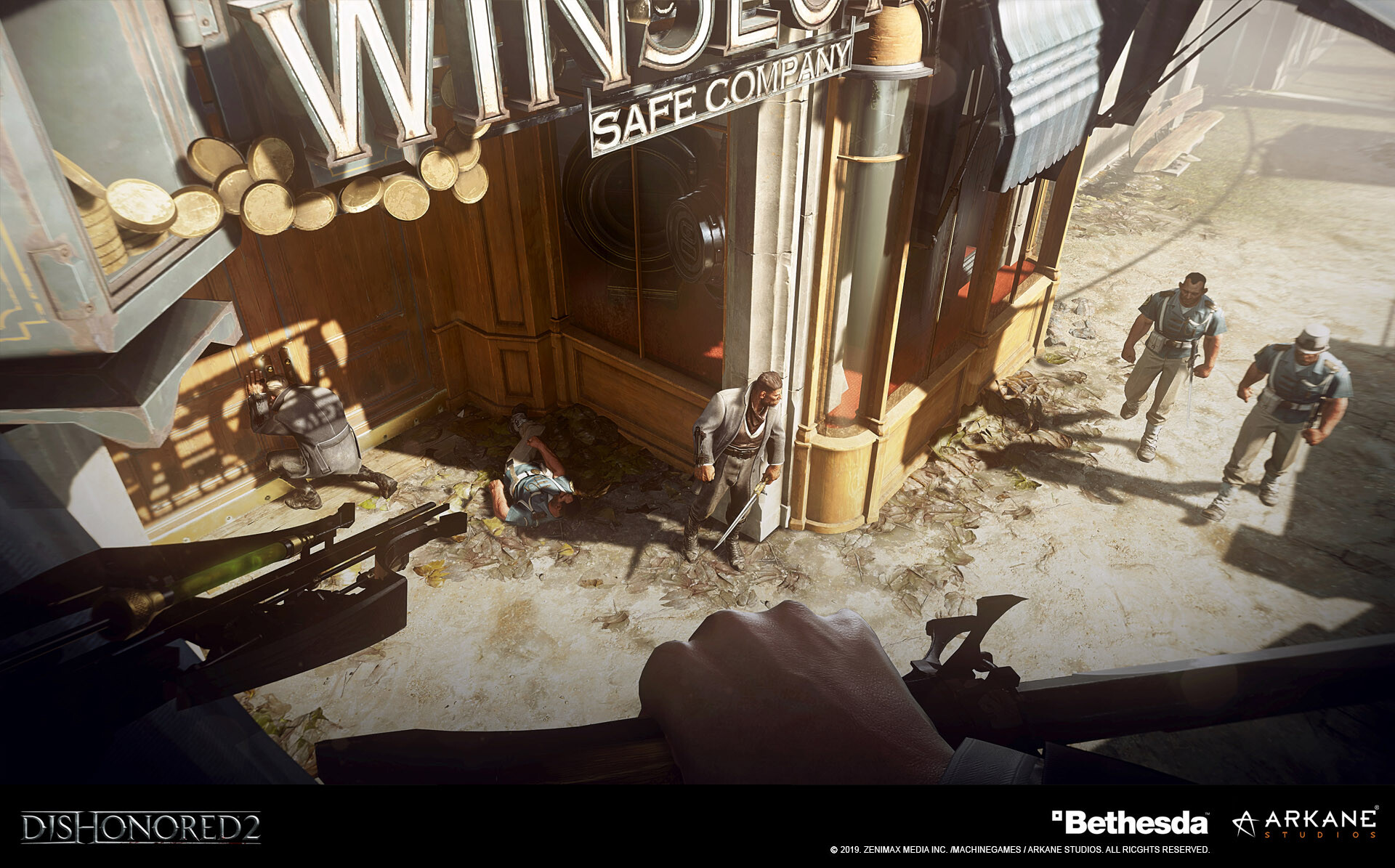
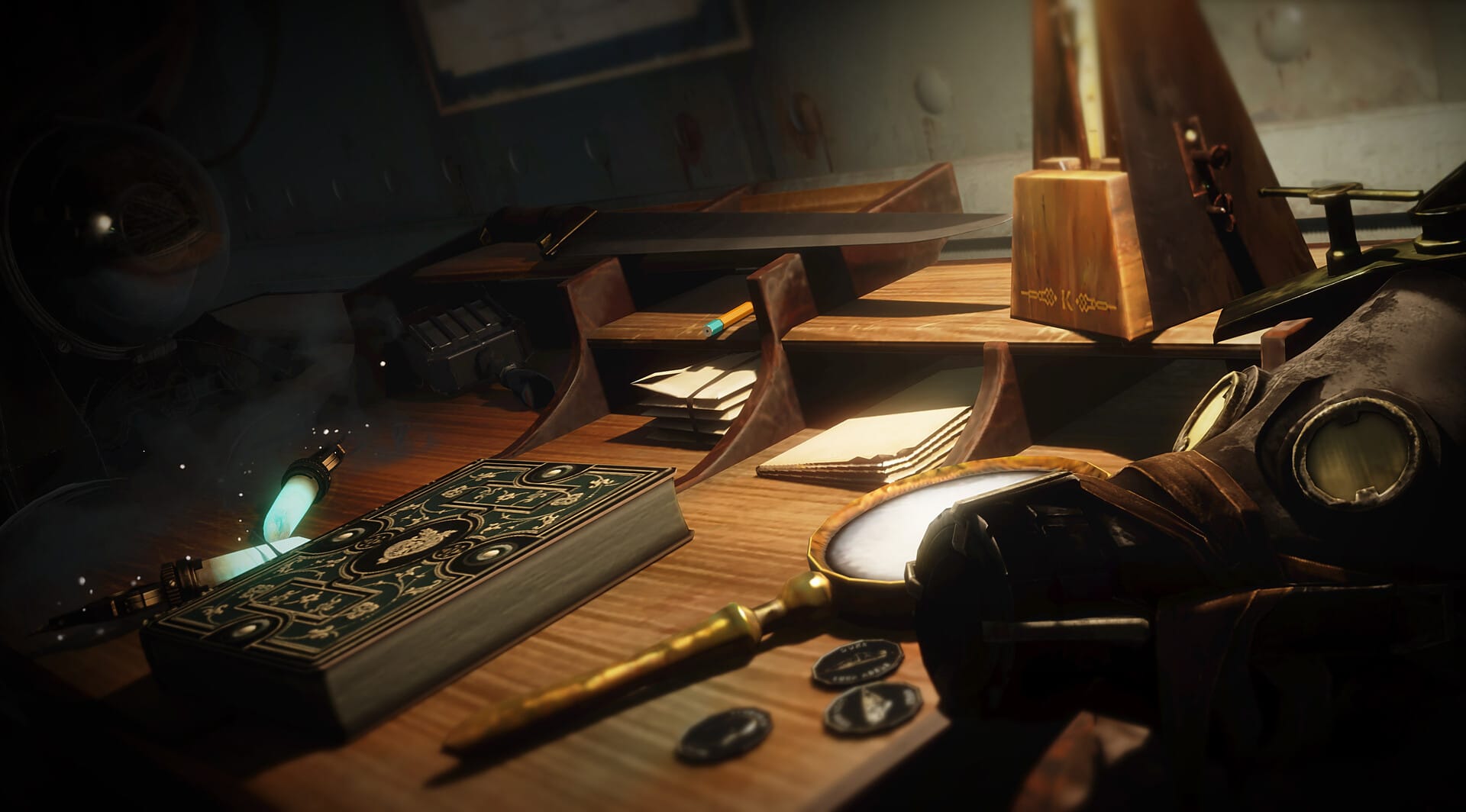
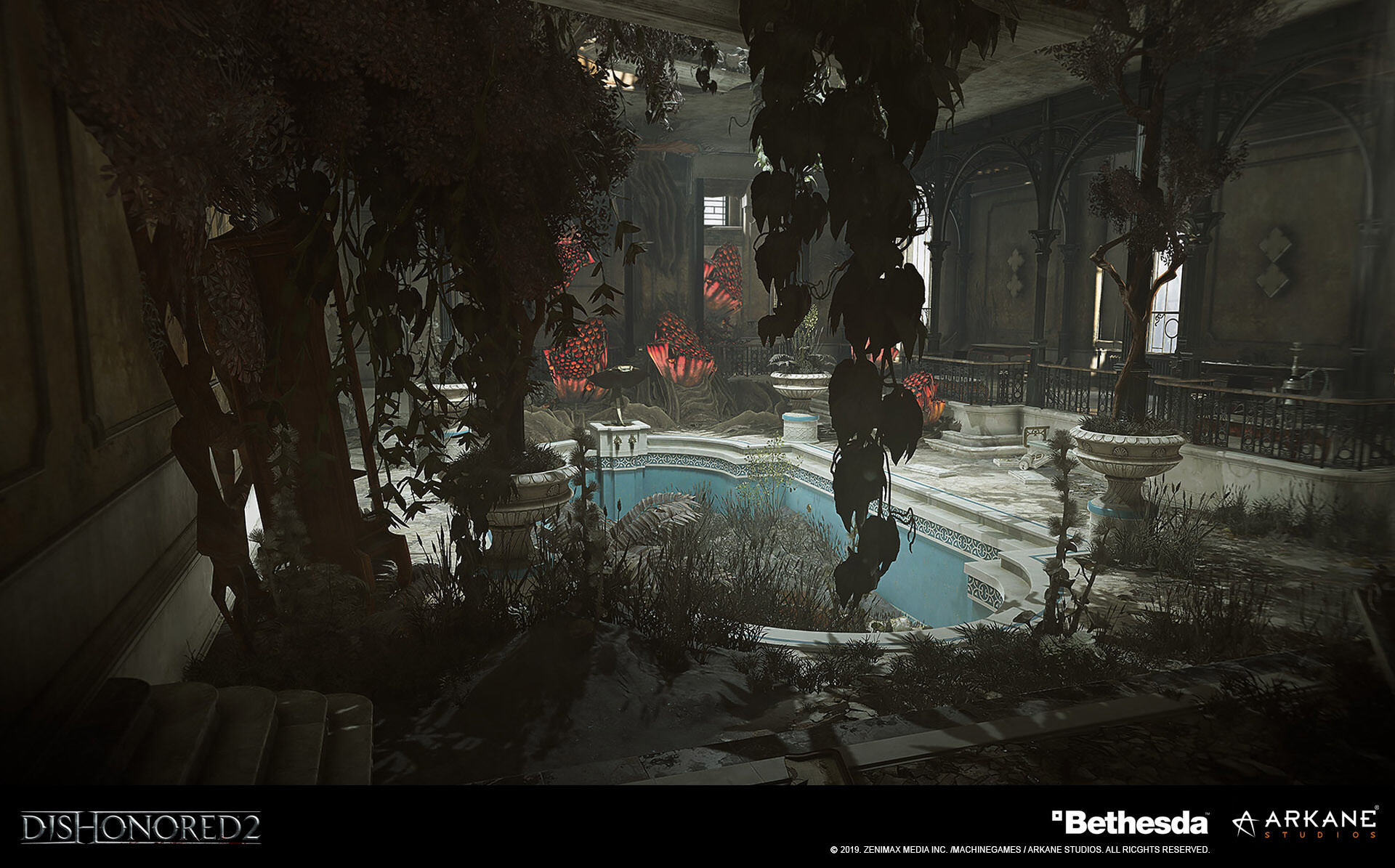
Not Dishonored 2 though. This game is a breath of fresh air. A clean and crisp art style that is wholly unique while drawing on a melting pot of real-world inspirations. And I was not surprised to see that the Void Engine, an in-house developed game engine spun off of Id Tech 6, makes it all possible. The modern DOOM titles, built on Id Tech engines, are incredible pieces of tech, optimized to perfection and the Void Engine follows suit. Like I said, it's a breath of fresh air when a game looks this good, has a memorable style, and runs smooth as butter.
The Story
I'm a sucker for a straightforward story in video games. Dishonored 2 can be boiled down to: these handful of people overthrew your rule and captured your father. Hunt them down. Easy to remember and easy to create objectives based on.
The Soundtrack
Just like Prey, a good main menu soundtrack feels so good.
Verdict
★★★⯪☆
I liked the idea of playing Dishonored 2 more than I actually liked playing it. It's hard to explain, read the review.